
Action Alert
Action Alert
Stop the Loss of 885 Acres of Ag Land – Comments Due Oct 21!
Action Alert: Stop the Loss of 885 Acres of Ag Land – Comments Due Oct 21!
The State of Alaska Department of Natural Resources (DNR) has issued a Preliminary Decision (ADL 234934) to convey 885 acres of state land in Point MacKenzie to the Alaska Industrial Development and Export Authority (AIDEA) for $0.
What’s happening?
Covenant Removal: The state is using a legal loophole ("merger of title") to extinguish long-standing agricultural covenants on this land.
Reclassification: DNR is reclassifying the land from agricultural potential to "Settlement-Commercial".
Dismissal of Ag Potential: The state claims hay production has "dwindled", agricultural covenants are a “burden” and that land uses should not stay static, implying agriculture has low value for Alaska's future.
No Public Input on Reversion: The Mat-Su Borough, without any stakeholder engagement or public hearings, transferred this land back to the state with instructions to strip ag covenants and give it to AIDEA.
The Alaska Farm Bureau strongly supports economic development, but not at the expense of agriculture. We demand a zero-net loss of agricultural land, stronger management, and meaningful public engagement.
Take Action Before Wednesday, October 21 at 5:00 PM:
Click the link: Go to the DNR Public Comment Portal or email PMRE.conveyance@alaska.gov.
Reference the decision: Include ADL 234934 in your comment header.
Use our key points:
Demand a zero-net loss—if ag land is reclassified, replacement ag land of equal or greater value must be designated before the reclassification.
Reject the assumption that agriculture is a secondary or low-value land use.
Demand an alternative proposal: the state is giving AIDEA agricultural land at no cost and with no clear plan for it’s use. The state should seek alternative proposal that would keep the land farmable.
Advocacy
We base much of our core issues based on the Resolutions that we’ve passed. View our position on livestock issues, renewable resources, regulatory issues, agricultural education issues and general agricultural issues.
Resolutions
This Resolution Platform was approved by those voting members (delegates) attending the November 4, 2017 Annual Meeting.
-
We support full funding by General Fund appropriations for the Division of Agriculture.
We support the protection of the corpus of the Agriculture Revolving Loan Fund (ARLF) and its assets and a General Fund appropriation of $10 million for re-capitalization.
We support the Board of Agriculture and Conservation (BAC) to advance the meat packing industry to private ownership utilizing a system of regional small plants.
We strongly urge that the Department of Natural Resources (DNR) and the Board of Agriculture and Conservation (BAC) continue reviewing and modifying the regulations governing the Agricultural Revolving Loan Fund (ARLF) to stimulate responsible agricultural lending. Federal loan guarantees should be pursued.
We urge additional funding from various State and Federal agencies for noxious weed management.
We strongly urge the Division of Agriculture to implement inspection for USDA organic standards.
We strongly urge that the legislature change certain statutes so that members of the BAC should not be restricted from applying for new ARLF loans or restricted from modifying existing ARLF loans while serving on the board.
We request the Division of Agriculture to request the Attorney General’s office review its decision to not allow BAC members to vote on agricultural issues of a general nature even when the producer participates within the production of that commodity. All Alaskans have access so no preference is granted to BAC members.
We support the creation of a new cabinet level department in state government called the Department of Agriculture.
We support legislation to require management of the Delta Bison Herd by restricting movement of the animals in such a way as to prevent damage to private property and agricultural commodities.
We support legislation requiring the State to determine the value of damage caused to agricultural commodities by the Delta Bison Herd and make compensation to the commodity owner at fair market value for the damage.
The Alaska Farm Bureau supports the containment of the Delta Bison Herd to state property through the use of containment fencing.
The Alaska Farm Bureau urges the Division of Agriculture to complete the necessary steps to complete the Nenana Totchaket project for a timely land sale.
The Alaska Farm Bureau encourages Alaska’s retailers to refrain from labeling as “local” or “locally-grown” any agricultural products produced outside the state.
We encourage and assist veterans who want to explore agriculture as a career choice, and support groups including, but not limited to, the Farmer Veteran Coalition and the American Farm Bureau Patriot Project.
We encourage the use of Alaska agricultural products by the Alaska Cruise ship industry.
-
We support the development of a Long-Range Plan for agriculture, drawing upon private and governmental agency input to identify and remove obstructions to agricultural success.
The Alaska Farm Bureau supports the production and usage of renewable bio-fuels.
We support legislation to develop an Alaska Farm Bill that will commit the state to solving its food security and alternative energy problems by taking advantage of the renewable resources Alaska farms already produce and encouraging research toward suitable seed, crops and livestock.
The Alaska Farm Bureau supports the concept of fee simple land sales, protecting agricultural interest through the use of agricultural covenants in state land titles for disposal of lands classified with agricultural potential. We encourage the State of Alaska to initiate or enjoin in legal actions to enforce the agricultural covenants. We further support the Boroughs, Mental Health Trust and Universities attaching agricultural covenants to designated agricultural potential lands they sell or own.
We strongly urge the Administration and Legislature to maintain a zero-net loss on land classified as agricultural and that these lands be protected.
The opportunity to use land wisely is the basic foundation of agriculture’s success. We support the transfer of the administration and management of state agricultural land and grazing areas and the disposal of such agricultural land to the Division of Agriculture.
We support legislation to lower interest rates to a comparable rate of the USDA on agriculture Title 38 land contracts administered by the Department of Natural Resources, Division of Mining, Land and Water.
We support State funding of the tax differential on agriculture lands to municipalities as established under AS 29 and maintain the provisions to said statute.
Damages to crops or livestock as a result of State and Federal resource management plans must include provisions to compensate property owners.
Grazing lands are important to Alaska’s red meat and livestock production. In light of the loss of valuable grazing lands to native land selection and to other Federal reservations and wilderness area designations, we support the Department of Natural Resources’ efforts to aggressively gain title to Federal land and to establish leasing policy on all lands with potential grazing in Alaska.
The Alaska Farm Bureau supports the sustained management of the cattle on Chirikof Island.
The Alaska Farm Bureau supports programs to address the spruce bark beetle infestation of affected areas by burning or the removal of affected trees and reforesting to protect and conserve soils.
The Alaska Farm Bureau encourages the resolution of land ownership issues stemming from Native Corporation selections and Statehood land selection.
The Alaska Farm Bureau supports legislative appropriation for matching funds for USDA’s Farm and Ranch Protection Program.
We support a rewrite of Title 29 to exempt property tax for agricultural land in production for commerce as long as it remains in agricultural production.
We support land trusts, including but not limited to, Alaska Farmland Trust, who are dedicated to assisting landowners in preserving their working agricultural lands.
-
The Alaska Farm Bureau opposes any law (current or future) that would make it illegal for animal owners to give medical treatment to their own animals.
The Alaska Farm Bureau encourages legislation that would permit the private ownership of indigenous game animals when the Alaska Board of Game has declared a surplus of such animals.
The Alaska Farm Bureau encourages the Alaska Legislature to amend AS 29.45.030 (a)(9) to remove the word “aquatic.” AS 29.45.030 (a) The following property is exempt from general taxation: (9) natural resources in place including coal, ore bodies, mineral deposits, and other proven and unproven deposits of valuable materials laid down by natural processes, unharvested plants and animals and timber.
We support the Federal and State veterinarians to work together to establish a system for the movement of sheep, goats and cervidae to, from or through Canada.
The animal health duties of the State Veterinarian must be maintained to protect the livestock industry as well as the general public health. The office of State Veterinarian should be transferred to the Department of Natural Resources, Division of Agriculture and be funded from the General Fund.
The Alaska Farm Bureau supports the establishment of a disease-free herd certification program for animals produced in Alaska. There should be coordination with Canada to have them honor the Alaska certification program for animal shipment into and through Canada. The certification program should be funded by the producers and with State funds.
We oppose the introduction into the wild of any endangered or invasive animal species into Alaska.
The Alaska Farm Bureau recognizes there will continually be discussions around interaction between domestic livestock and wildlife and concerns over transfer of infectious agents. The Farm Bureau supports management practices for wildlife and domestic livestock based on science, data, and knowledge, where appropriate studies have been conducted by independent scientists. Management decisions should be led by the appropriate agencies – Office of the State Vet for domestic animals and Dept. of Fish and Game for wildlife – with involvement from stakeholders in the decision-making process.
-
The Alaska Farm Bureau encourages the governor to appoint active Alaska agricultural producers to the University Board of Regents, as a Land Grant College; the University of Alaska Board of Regents should include members with at least an agricultural background.
The Alaska Farm Bureau supports FFA and 4-H, agri-science and natural resource education programs throughout the State that develop industry-based education skills development and leadership to prepare individuals for Alaska’s agricultural and natural resources industries.
We support Ag in the Classroom, a program sponsored by the Alaska Farm Bureau. We support the mandatory addition with adequate state funding of Ag in the Classroom to the curriculum of all Alaska schools. We feel that students need to know the sources of their food, fiber, and fuel.
We support the expansion and line-item funding for Extension Ag, FFA, and 4-H Agents and their youth development work statewide.
We encourage the Legislature to continue the necessary general funding to the University of Alaska, School of Natural Resources and Agricultural Sciences, Agricultural and Forestry Experiment Station to protect the matching Federal Hatch and MacIntire-Stennis funds to meet the needs of the agricultural industry.
We oppose the sale of any part of the University Experimental Farm, any agricultural research facility or any agricultural properties. Should such a sale be unavoidable, the proceeds shall be applied to agricultural research.
We strongly urge the Administration, Legislature and the University maintain a no net loss on agricultural research capability.
The University of Alaska will expand and preserve its agricultural curriculum, revitalize agricultural research programs, and proactively support the Alaska Agricultural and Forestry Experiment Station and the Cooperative Extension Service programs. The University of Alaska’s leading objective as a land grant university is agricultural education, as mandated in Federal and State legislation.
The Alaska Farm Bureau encourages all Alaskans to observe Alaska Agriculture Day, the first Tuesday of May and recognize the Alaska Agricultural Community.
-
The Alaska Farm Bureau supports laws that enable youth employment to be no more restrictive than the Federal Fair Labor Standards Act.
The Alaska Farm Bureau supports the active enforcement of the local Agricultural and Fisheries Product Preference Act as provided for in AS 36.15.050.
Encourage the Legislature to investigate and provide opportunities for Worker’s Comp insurance in a manner farmers and small business can afford. The availability needs to be competitive and the limit of claims needs to be set.
The Alaska Department of Fish and Game shall not relocate any wildlife without first testing the animals for disease. Test results shall be provided to the State Veterinarian. No wildlife shall be relocated if it is infected with communicable disease.
Inspection services of agricultural products including meat grading, vegetable quality, etc. are a consumer protection and, therefore, these services should be paid for with general funds.
We support fair implementation of the Food Quality Protection Act (FQPA). Any action by EPA to eliminate crop protection tools should be based on sound, scientific evidence and have been peer reviewed. We urge Congress to provide oversight to EPA to insure that implementation occurs as Congress intended. We support implementation of a disposal assistance program for hazardous farm chemicals.
The Alaska Farm Bureau requests that agricultural water users be classified as less than “significant users”.
The Alaska Farm Bureau believes any fines levied against producers by State Agencies or local government shall not be returned to agency funds.
Regulations and certification fees can be a burden to the marketing of agricultural products. The State shall provide free training when implementing new regulations.
The Alaska Farm Bureau supports the implementation and enforcement of COOL (Country of Origin Labeling) legislation as approved in the 2002 Farm Bill.
The Alaska Farm Bureau supports Federal and State legislation to over-turn the effects of the Kelo decision. Should a government agency condemn farm property for another purpose the value shall be based on the highest market value.
We support voluntary premise ID for animal and bird operations. Premises used for gatherings such as shows; demonstrations and competitions should be excluded from premise ID requirement.
We believe the conservation Reserve Program (CRP) contract renewal eligibility should be based on Environmental Benefit Index (EBI) and any cropland waivers in place at the time of initial contract approval.
Local foods should receive an exemption from USDA and local schools nutrition guidelines in Alaska school districts. Individual school districts are encouraged to actively include local foods.
We support the removal of the statement “veterinarians should not advocate the sale or consumption of raw milk” in the Alaska Board of Veterinary Examiner’s Handbook (2013)” (Under Milk Ordinance).
-
State Ferry agricultural discounted fares should include, but not be limited to agricultural equipment, livestock, produce, feed, seed, fish by-products and fertilizer. We support legislation that provides statutory allowance of 50% reduction of rates for Alaska agricultural commodities and livestock producers on a space available basis.
The Alaska Farm Bureau opposes any action by the Alaska Railroad that would negatively impact agriculture in the state.
The Alaska Farm Bureau supports full implementation and funding of the Alaska-Hawaii Title for Geographically Disadvantaged Farmers and Ranchers to the current Farm Bill. This title has transportation and production credits for states designated as geographically disadvantaged.
Issues We are Talking About
-
About the Issue
The goals of this Order are to increase food security, strengthen local economies, and lessen Alaska’s dependence on external foods and supply chains. The State of Alaska has a vested interest in promoting the health, safety, and wellbeing of its citizens. Other than water, heat, and shelter, a reliable, affordable, and sufficient food supply is the highest need of a society.
As an isolated State with limited infrastructure and tremendous dependency on imports, the State of Alaska has a duty to improve the local production, harvest, and growth of foods and increase access to a sufficient supply of nutritious and safe food. Currently, approximately 95 percent of the food Alaskans purchase is imported, costing roughly two billion dollars annually. This is an enormous wealth transfer from Alaskans to outside entities. During the COVID-19 pandemic global supply chains have been stressed. Furthermore, Alaska is at the end of the supply chain for goods and food coming from the West Coast. At the height of the pandemic, the Port of Seattle was on the brink of closing, which would have drastically impacted the ability for shipping carriers to bring goods and food to Alaska. Most recently, the logistical shock has rippled into grocery stores and family homes across the State, with food and other essentials becoming difficult to obtain due to restrictions on overland trucking between Canada and the United States.
Solution
The Task Force will review and provide recommendations to the Governor of the State of Alaska regarding food security goals and policies, and guidelines for state initiatives which, to the maximum extent possible, increase local production, harvest, processing, storage, and use of food products. Once the report is received, there may be further clarification and deliverables identified that would require additional work by the Task Force.
-
About the Issue
Wildlife causes an estimated $1 billion in damage to agriculture operations in the U.S. annually, wildlife also transmit parasites and pathogens to livestock and humans. Farmers and ranchers are already expected to foot the bill for damage or disease caused by wildlife on their farms as well as keeping their livestock from getting out into the wild.
From predators killing livestock to moose eating crops to bison wrecking barley fields, it’s a constant battle and expense for farmers to protect their livelihood from wildlife. On top of this, there is not a clear answer from ADF&G on farmers taking game in defense of life and property. Farms have attractants, but this doesn’t mean the farmers are trying to attract wildlife. Many farmers are fearful of getting in trouble if wildlife comes around, and definitely if they have to take game in defense of life & property.
Solution
ADF&G needs to define more clearly that farmers can defend their life & property without getting in trouble. Normal farming practices (feeding livestock, growing crops) should not be considered improper handling of attractants to wildlife populations. Without this type of legislation, farmers will continue to be in direct conflict with Alaska’s dynamic megafauna as we continue to share the same space with wildlife.
Where the Bill in Is Process: Looking for a bill sponsor or regulation change
Call to Action: Language to get you started is coming soon.
Who To Reach Out To: Governor Dunleavy: Feedback (state.ak.us), ADF&G Commissioner & your personal legislators
-
About the Issue
Domestic sheep and goats have been bearing the brunt of blame for pneumonia outbreaks in big horn sheep. M. ovi is the pathogen that is primarily being focused on. This pathogen exists in both wild and domestic populations. Because of the possible risk of transmission between domestic and wild populations, attempts over the past several years have been made to place expensive and burdensome regulations on Alaska’s sheep and goat owners; testing livestock imports from outside the state is just one piece.
Science and data do not support required testing of M. ovi as a solution to pneumonia outbreaks.
M. ovi is endemic in North American small ruminants.
M. ovi positive does not mean diseased; some M. ovi positive big horn herds have had pneumonia outbreaks while others are thriving.
M. ovi is not limited to sheep, goats and muskox as assumed; testing in Alaska has found M. ovi in deer, caribou and moose.
Alaska has had no die-offs associated with M. ovi.
Testing showed similar prevalence of M. ovi positive wildlife as domestic animals, around 4-5%.
M. ovi found widespread across Alaska in wildlife, including remote areas where there is no interaction with livestock.
M. ovi is not new to Alaska; wildlife test samples dating back to 2004 have tested positive for M. ovi.
More information on science and studies involving M. ovi can be found here.
With M. ovi currently in Alaska’s wildlife populations (across the state and in multiple species), testing imported sheep and goats will have no impact on M. ovi being in Alaska’s wildlife populations, it will increase the cost to our farmers to do business. It will increase costs to maintain healthy flocks by bringing in new genetics. It will increase costs to the consumers who get meat, dairy or fiber from these farms. It will increase costs to our 4-H and FFA kids.
Solution
We need to continue research to better understand M. ovi and respiratory issues in wildlife and livestock. We would like to see increased education & outreach from state agencies to sheep/goat owners including good herd health management plans, proper protocol for wildlife coming onto farms, etc.
Where is this in the Process: Draft regulations proposed by Dept. of Environmental Conservation that would require M. ovi testing for all sheep & goat imports which is still in review process.
Call to Action: Here’s some language to get you started:
Wildlife organizations continue to push for unreasonable regulations over domestic sheep and goats, including required testing for M. ovi. This would be expensive and burdensome to Alaska’s farmers and ranchers, limiting the ability to grow and succeed in their business without benefiting Alaska’s wildlife.
M.ovi is an incompletely understood pathogen that is already widespread in Alaska, including areas without domestic animals. Instead of overregulating our sheep and goat farmers, the state should be working with sheep and goat owners on improving education and outreach around wildlife/livestock interaction issues. Working on cost-effective and efficient strategies that maintain separation and continuing research on M. movi and respiratory pathogens.
Support Alaska farmers and ranchers by working with them instead of regulating them.
Who To Reach Out To: Governor Dunleavy: Feedback (state.ak.us), Dept. of Environmental Conservation Commissioner, Jason Brune, Jason.Brune@alaska.gov
-
About the Issue
In order to comply with state and federal laws, farmers are required to provide certain information to DEC or DNR; importing livestock, testing of certain pathogens or diseases, etc. There are also situations where a farmer may want to participate in a voluntary testing program, whether it’s to determine prevalence of newer pathogens or things like maintaining Alaska’s scrapie free status.
Currently, there is no protection over personal or business information on records that go through DEC or DNR. Records that identify a particular animal, crop, business, individual’s name and address, or specific results from testing are subject to the Public Records Act.
Alaska’s farmers and ranchers should be afforded the same protections other industries have in protecting personal and business information.
Solution
Give DNR and DEC confidentiality over certain information to protect our farmers.
Where the Bill in Is Process: Looking for sponsors.
Previous legislation that supports this policy: In 2018, HB315 was a Governor’s bill to support this. Read the full bill language. {Link to Leg Page} Alaska State Legislature (akleg.gov)
Call to Action: Here’s some language to get you started.
The Governor’s office should sponsor this bill: support giving the DNR and DEC confidentiality over animal and crop records to protect our farmers personal and proprietary information.
Who To Reach Out To: Send feedback to Governor Dunleavy’s Administration at Feedback (state.ak.us)
2026 Priorities
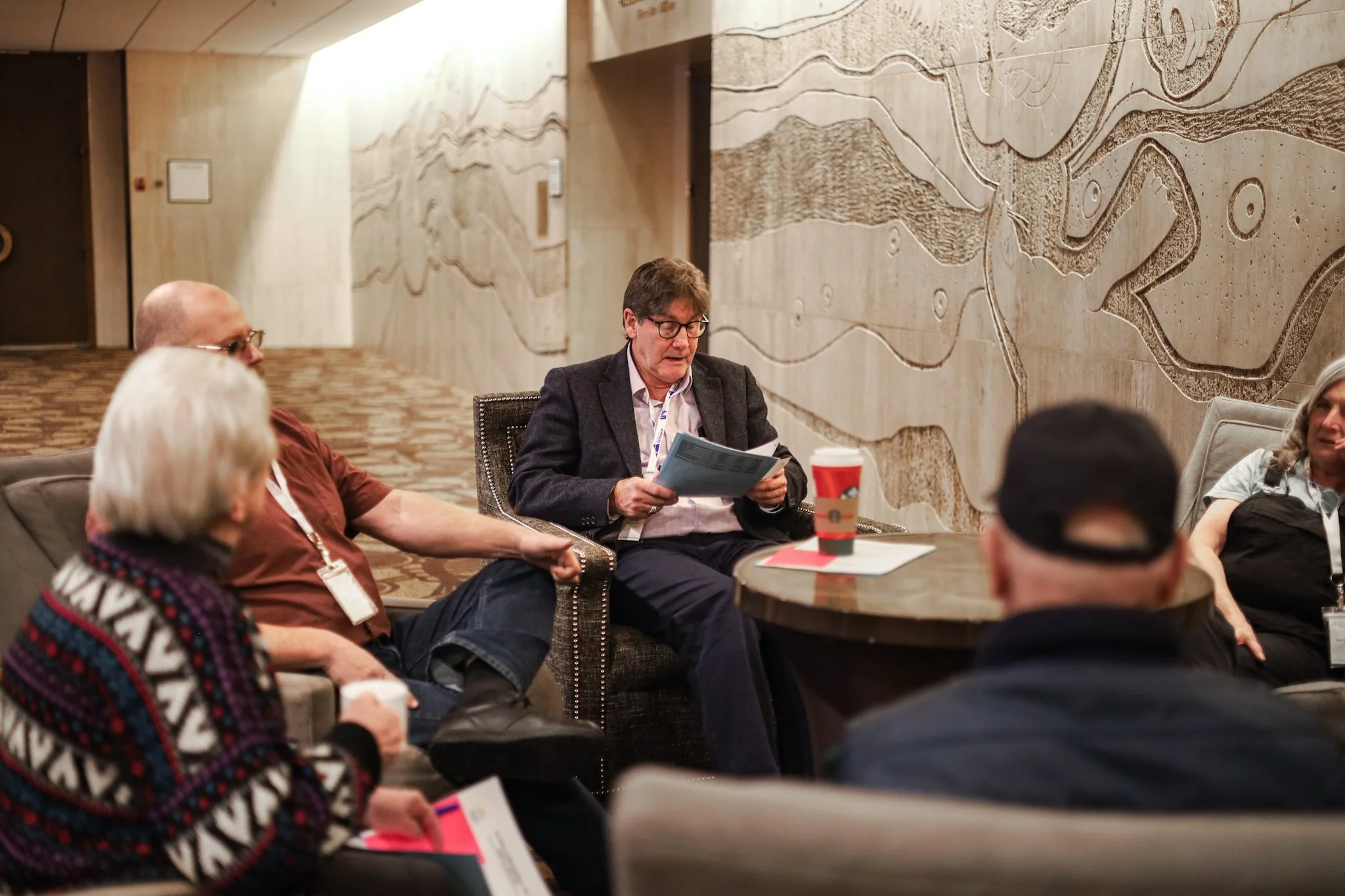
Through our consensus process, we are able to find the legislative priorities that will have the greatest impact on our farmers and food for all Alaskans.
01
Double Up SNAP - $750,000 for SNAP recipients to double the amount they can spend on Alaska Grown products
04
Provide incentives for getting and keeping land in agricultural production
02
Improve the process for leasing state lands for agriculture purposes
05
Increase funds to expand efforts on Alaska Grown market development
03
Incorporate university level agriculture equipment mechanics tech classes
Every year at our annual meeting, our membership comes together to discuss the legislative priorities for that year.
Where Our Advocacy Has Worked
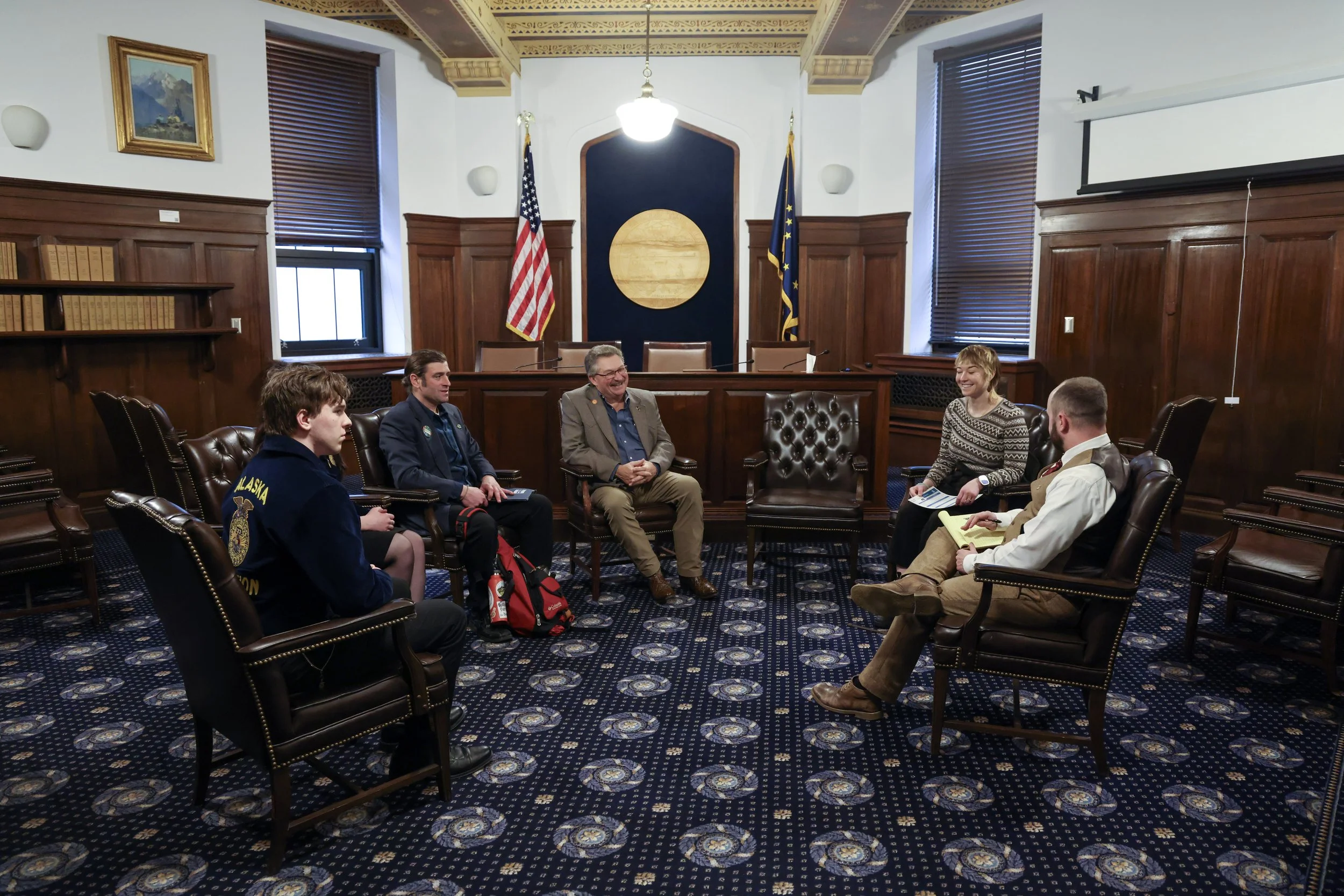
When farmers win, everybody wins.
Becoming a Successful Farm Advocate
It can be intimidating to contact your local representatives and have your voice heard. Your voice is important and your thoughts, opinions, and expertise have a huge impact in helping educate and influence our local, state, and federal decision makers in helping build a stronger agricultural system in Alaska.
The American Farm Bureau has put together an incredible advocates toolkit that will give you the know-how to get started talking with your local leaders.
Find your voice through advocacy by starting now fb.org/advocacy/grassroots-and-political-advocacy/advocates-tool-kit/